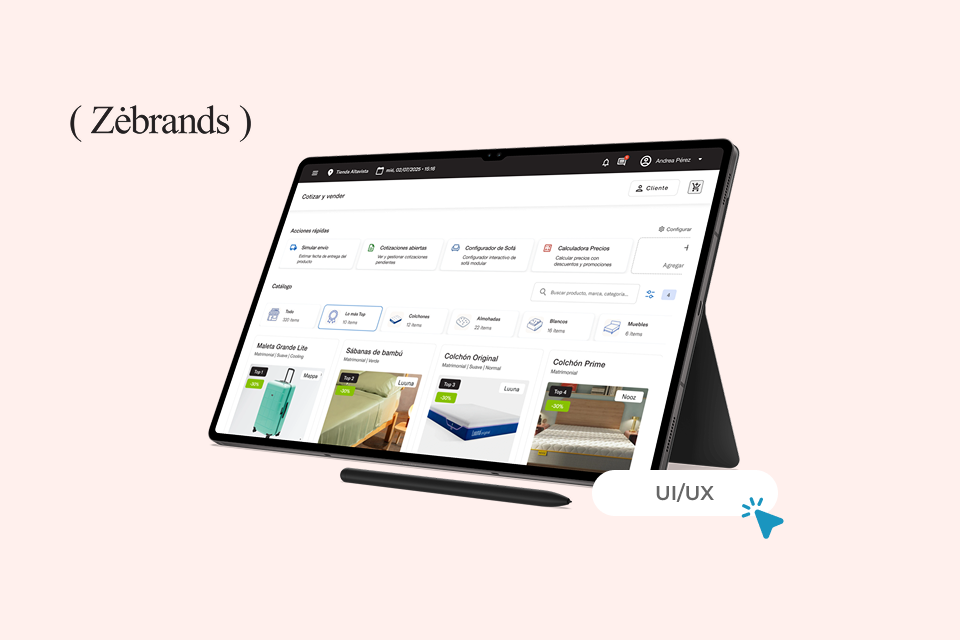
200 stores, zero downtime. A system redesigned to scale.
From a fragile POS with critical dependencies to an omnichannel platform. End-to-end redesign of architecture, flows, and real-time operations — launched before Buen Fin with zero incidents.
CompanyZebrands
Duration8 months
Team18 people
MarketsMexico · Brazil
My roleProduct Designer UX/UI — sole designer
−80%
Sync errors
75%
Users with higher perceived speed
−50%
Time to create an order
200+
Stores with zero launch incidents
Context
Zebrands is an omnichannel retail company with operations in Mexico and Brazil. As part of its multi-store ecosystem, it runs its own point-of-sale system used in more than 200 physical stores. In 2024, I led the full platform redesign, collaborating with a cross-functional team of frontend, backend, architecture, and technical leadership.
The project emerged after identifying critical performance, stability, and operational issues during high-demand events like Hot Sale. The work wasn't just about redesigning the interface — it meant rethinking a system capable of supporting real-time, multi-store transactional operations, reducing friction on the sales floor, and preparing the platform to scale sustainably.
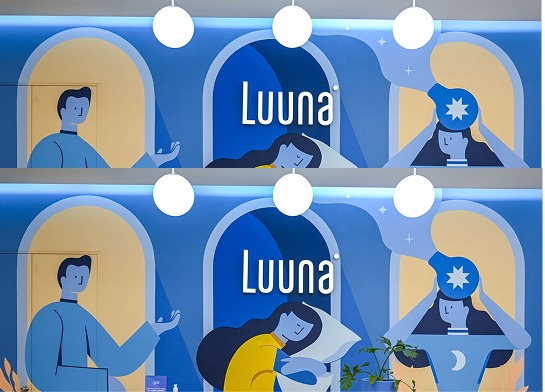
The system in context — Luuna Brand
luuna.png
Brand context and product ecosystem within Zebrands
Project summary
The problem
The POS had high load times, an overloaded catalog, inconsistencies across modules, and a critical dependency on the RPNext ERP. Sales staff could cause system crashes through everyday actions.
The goal
Turn the fragile system into a scalable platform by optimizing the catalog, availability, and operational flows — improving service speed, stability, and in-store experience.
My role
I led the UX strategy and experience as the sole Product Designer UX/UI for most of the project — defining flows and architecture, and collaborating on implementation in live operations.
The impact
A faster, more stable system. Successful rollout to 200+ stores before Buen Fin 2024 — the most critical high-demand event of the year — with zero major incidents.
System architecture — designing for a living system
Availability search
User
Catalog
Cart
Payments
ERP-Next· single source of truth
Order creation
Inventory sync.
Pricing & promotions
Payments
Availability search
User
Catalog
Cart
Payments
ERP-NextSingle source of truth
Order creation
Inventory sync.
Pricing & promotions
Payments
Architecture diagram — flows between catalog, cart, payments, and ERP
02
Design System independent from the ERP
Building a design system that didn't depend on RPNext's release cycle — a decision that unblocked team velocity and enabled parallel iteration without relying on legacy architecture.
03
Prioritizing performance over complexity
Designing for intermittent connectivity. Prioritizing load times and operational stability before adding new features. The system had to work in stores with limited network infrastructure — zero margin for error.
How did we work under pressure?
1
Research
Field research
Store visits, staff interviews, error detection, and SLA tracking via monitoring tools.
2
Architecture
Event Storming
Workshop to map the domain and redefine event architecture alongside backend.
3
Design
Parallel design
Flows and prototyping of the 3 critical flows: catalog, cart, and payments/shipping in short cycles.
4
Validation
Pilot and rollout
Pilot testing, fast adjustments, and progressive rollout to 200+ stores before Buen Fin.
Operational impact — before vs after timing
Performance
Initial load4–6 s→<3.5 s
Catalog search4–6 s→3–5 s
Order confirmationvariable→<15 s
Error reduction
Sync errorshigh→−80%
Catalog errorsfrequent→−5%
Service errorscritical→−1%
Trust and adoption
Time per order4–6 min→3–5 min
Shipping confirmationslow→<15 s
Launch incidentscrash→0
The POS was rolled out progressively — pilot stores → validation → full flow — scaling to 200+ stores before Buen Fin 2024 with no major operational incidents.
Before vs After — critical flows
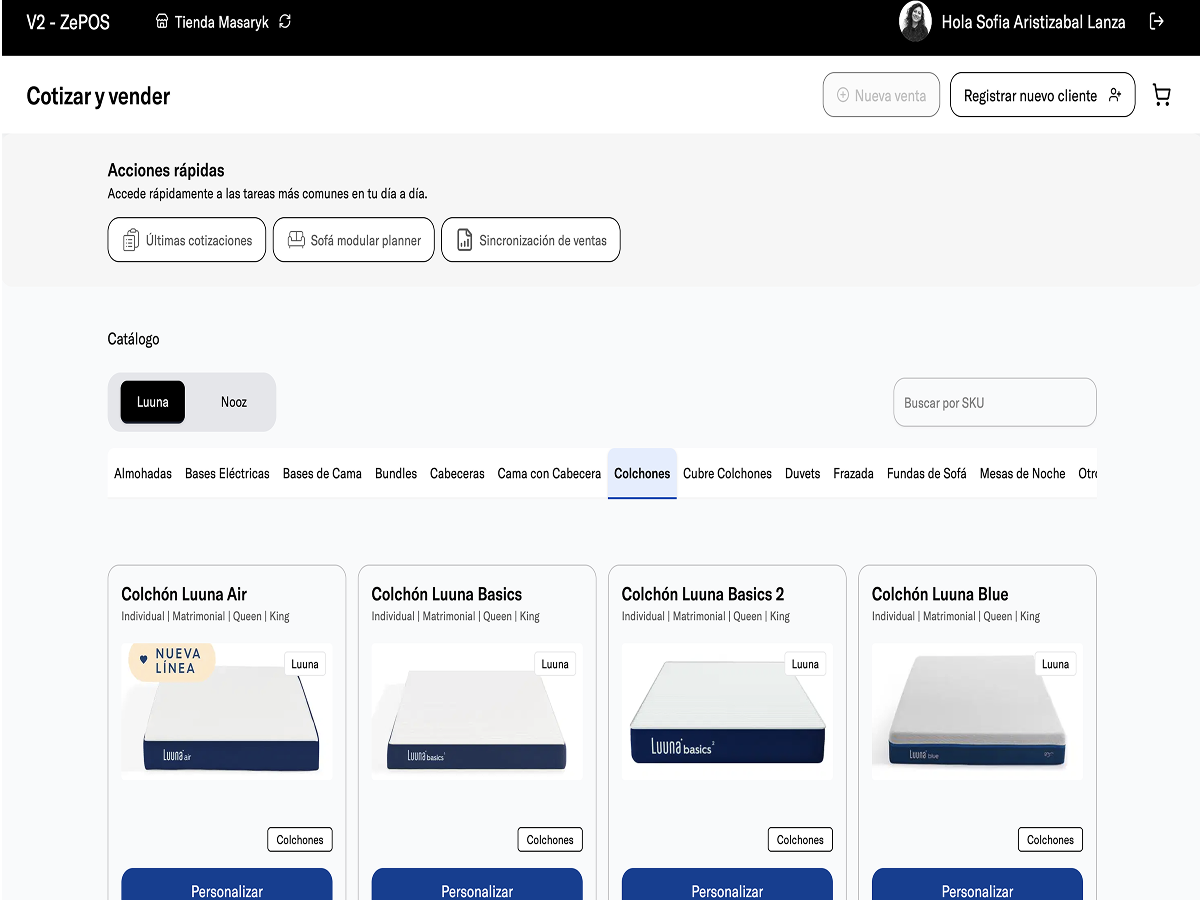
Catalog
Catalog V1
catalogo-v1.png
Slowness — the catalog creates operational bottlenecks
Overloaded with discontinued products
Passive search with no filters
Missing visibility of key product information
Catalog V2
▶ Live flow
Optimized search with multiple filters
Only active, relevant products
Intuitive, multichannel product cards
Key information visibility resolved
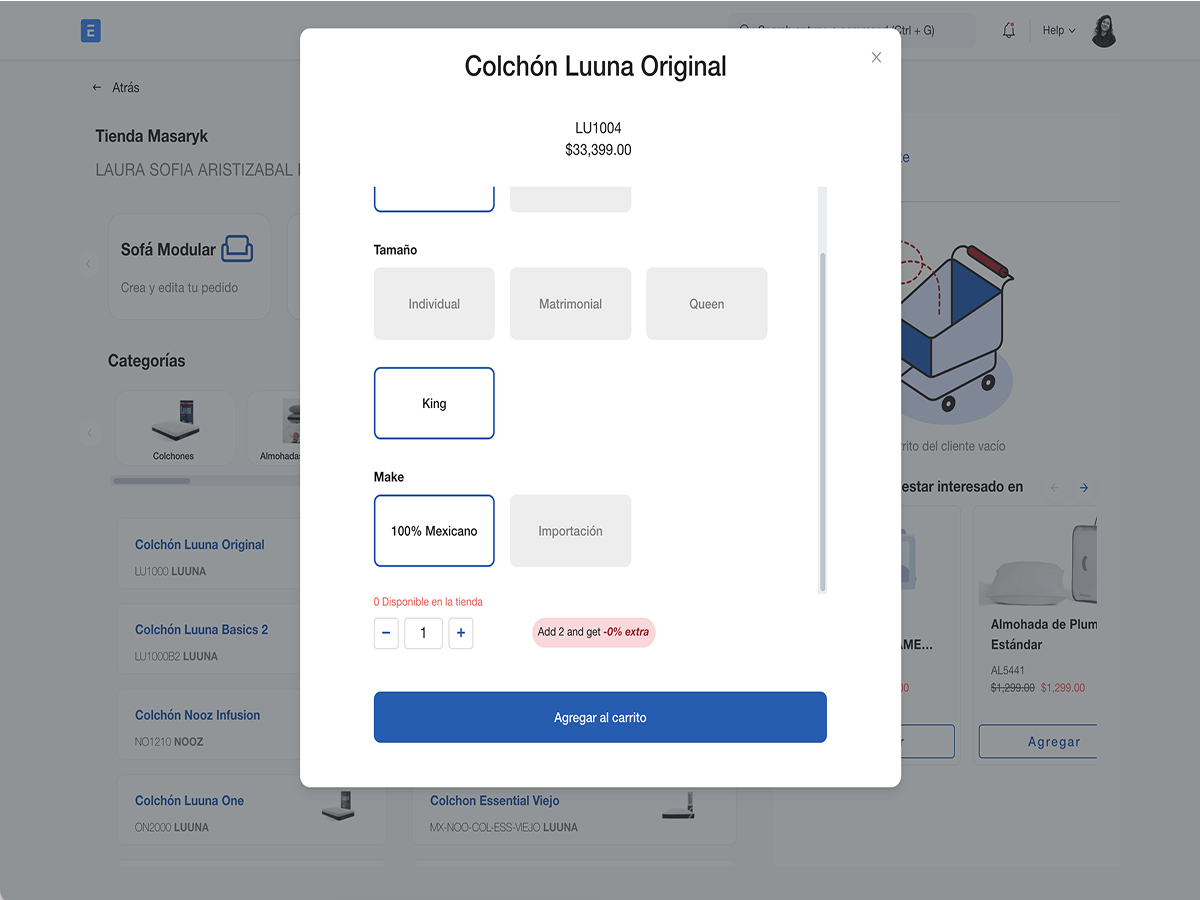
Product modal
Modal V1
modal-v1.png
Overload of non-essential information
Falta de elementos para el flujo critical
Unclear information architecture
Modal V2
▶ Live flow
Intuitive card design with improved architecture
Visual support for relevant product features
Integrated availability — no external platforms needed
Cart
Cart V1
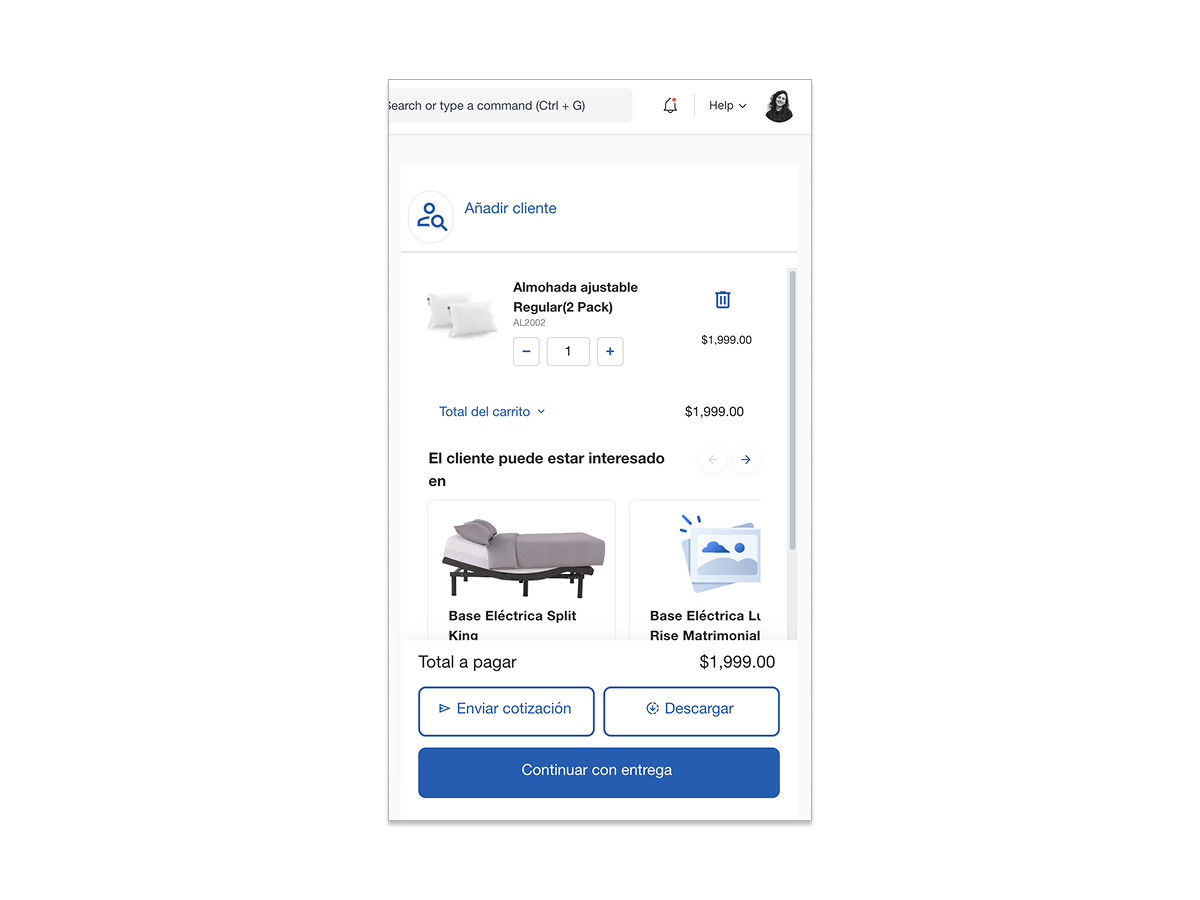
carrito-v1.png
Overload of non-essential information
Falta de elementos para el flujo critical
Unclear information architecture
Cart V2
▶ Live flow
Improved information architecture
Fast, smooth checkout
Real-time availability visibility
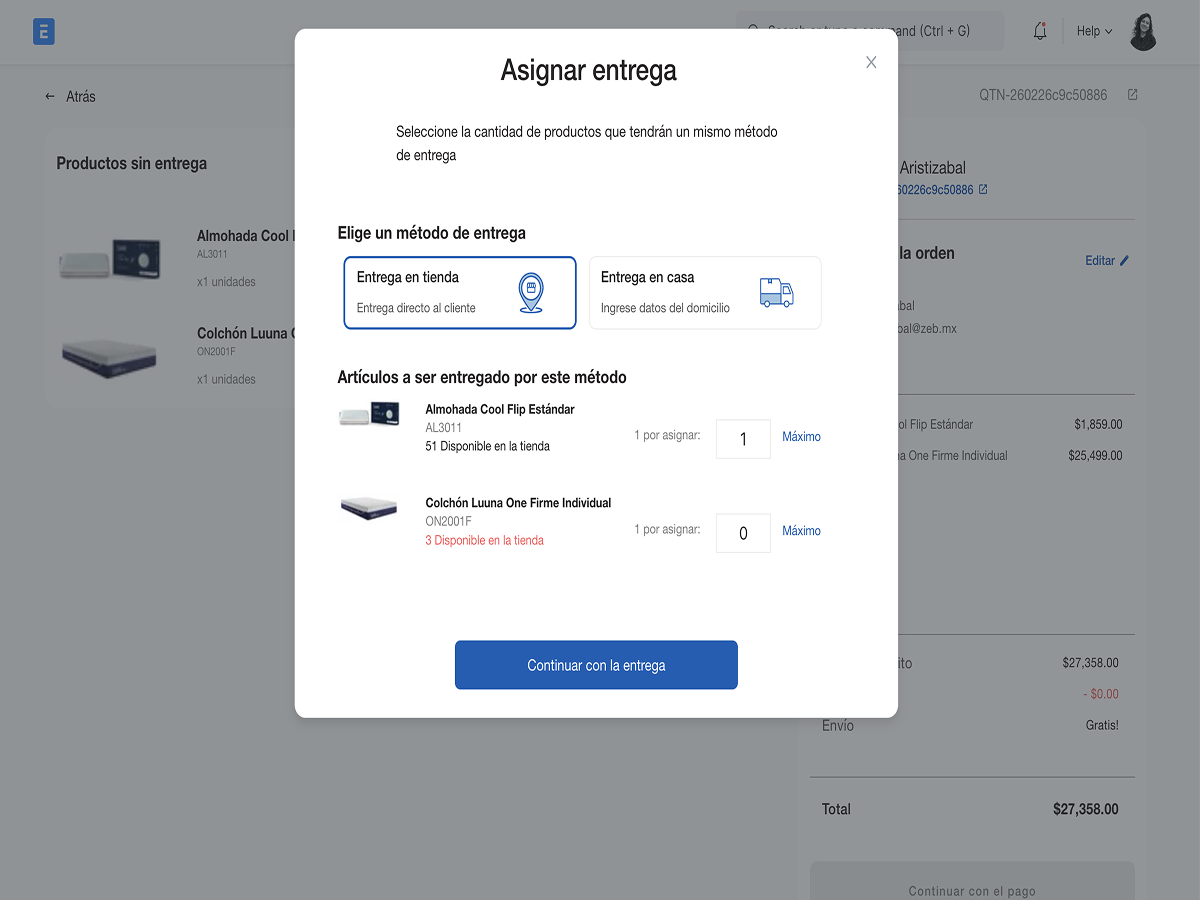
Shipping
Shipping V1
envio-v1.png
Flujo critical en un solo modal sin salida
Insufficient feedback during calculation steps
Missing assignment and delivery logs
Shipping V2
▶ Live flow
Fully redesigned flow with real-time configuration
Integrated inventory services
Redesigned cards to speed up in-store sales
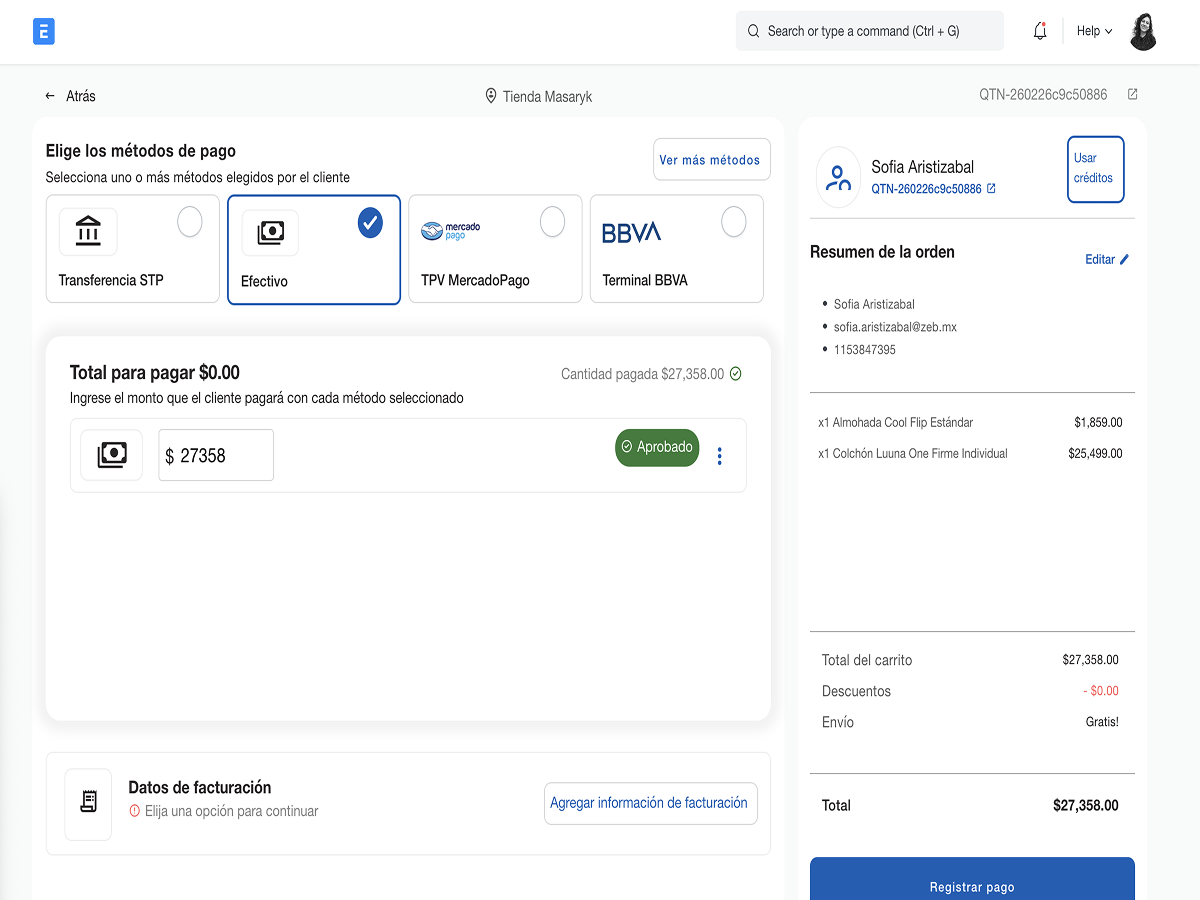
Payment
Payment V1
pago-v1.png
Disorganized payment methods with no hierarchy
Feedback insuficiente en procesos criticals
Unclear error states with no recovery path
Payment V2
▶ Live flow
Simple, step-by-step guided flow
Clear, real-time states
Secure experience with clear exit states
What this project changed in how I design
Takeaways
Designing for resilient systems
Designing complex systems means thinking beyond screens — understanding architecture, operations, scalability, and how every interaction directly affects people working under real-time pressure.
Performance is also UX
It's not just about making the user happy on the ideal path. Thinking about failures, states, and recovery is as much a part of design as the main flow.
Architecture shapes experience
Backend and UX aren't separate worlds. Collaboration is key — every technical decision has direct consequences on how the product feels and functions.
Scaling requires clarity
Simple systems, clear metrics, and solid documentation make it possible to grow without losing control of operations or product consistency.
"Designing complex systems taught me that information architecture shapes experience — every technical decision has direct consequences for the people who use the product every day."